How Long Will “2026 Is The New 2016” Actually Last?
Internet trends usually have a shelf life you can predict almost to the week. This one’s been a little different.
The pattern so far
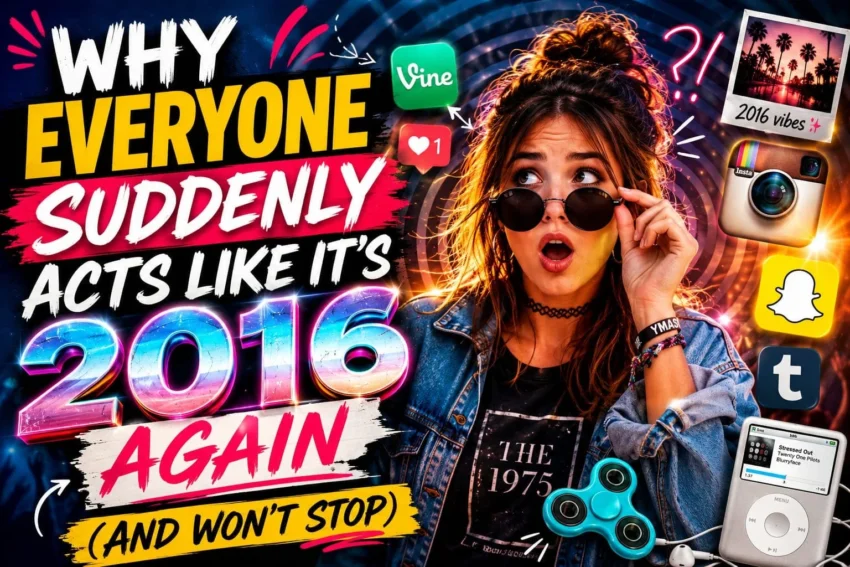
Most viral audio or meme formats peak around day 5-7 and are dead by week three. The 2016 nostalgia wave broke that pattern almost immediately — it started January 1st, and by mid-month it had grown rather than faded, picking up celebrity participation well past the point where most trends would have already been replaced by the next thing.
Why this one has legs
A few reasons this is sticking around longer than the usual meme cycle:
It’s not tied to a single platform. Most viral trends live and die on TikTok specifically. This one jumped to Instagram, then to X, then into actual entertainment journalism — which is usually the sign a meme has crossed over into something people will keep referencing for months, not days.
It’s infinitely personal. A dance challenge requires you to participate actively. This trend just requires you to open your camera roll. The barrier to entry is essentially zero, which means the supply of “new” content never runs out — everyone has their own 2016 photos nobody’s seen yet.
It’s not selling anything. No brand owns this. No single creator can claim credit for starting it. That decentralization is usually what kills momentum fast — but here, it’s done the opposite. There’s no gatekeeper deciding when it’s “over.”
The thing nobody’s talking about yet
Here’s the detail that’s slipping under the radar: this isn’t really about 2016 at all. Watch closely and you’ll notice teenagers — kids who were five or six years old in 2016 and have zero actual memory of it — participating just as enthusiastically as the people who lived through it. They’re not nostalgic for 2016. They’re nostalgic for the idea of 2016, constructed entirely from older siblings’ photos and secondhand internet folklore.
That’s a different phenomenon than normal nostalgia. It’s borrowed nostalgia — missing a time you never actually experienced, because everyone around you keeps telling you it was better.
If that holds, this trend isn’t really about a specific year at all. It’s a preview of how internet culture is going to keep processing time from here on out: not as a memory, but as an aesthetic anyone can borrow, regardless of whether they were there.
So no — “2026 is the new 2016” probably won’t last as a phrase. But the pattern underneath it almost certainly will. Expect “2027 is the new 2017” right on schedule.